An alternative history of video games - PC Engine, UK grey imports and Japan in the 80s.
There’s a famous William Gibson quote about technology: “The future is already here - it’s just not evenly distributed.”
As dumb kids, we understood this to mean that new technology originated in Japan, before gradually filtering out to the rest of the world.
That was certainly the case with video games, and the global rollout of new systems followed a set hierarchy. A Japanese debut, followed by the US, then Europe and the UK, and eventually the rest of the world.
However, for a brief period in the late 80s, a small group of UK retailers turned all that on its head.
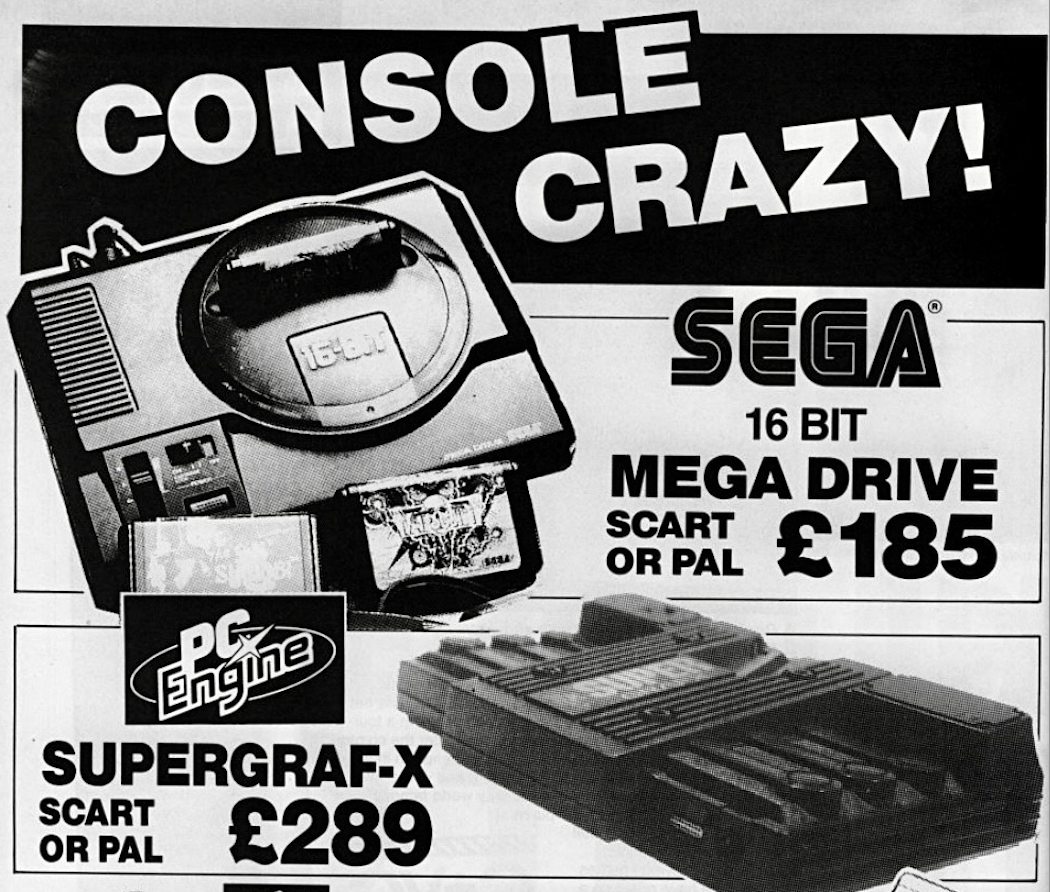
By circumventing official channels, and going straight to the Japanese high street, they were able to get the PC Engine (TurboGrafx-16), Sega Mega Drive (Genesis) and Neo Geo in local consumers’ hands years before they arrived on US shores.
These were known as ‘grey imports’. And they challenge the accepted narrative around video games, and how they conquered the world. Let’s take a closer look, and see if we can rewrite history.
Big in Japan
First. A definition to get us all on the same page; “Grey imports, also called parallel imports, are genuine, brand-name products brought into a country through unofficial channels without the original manufacturer's explicit permission.”
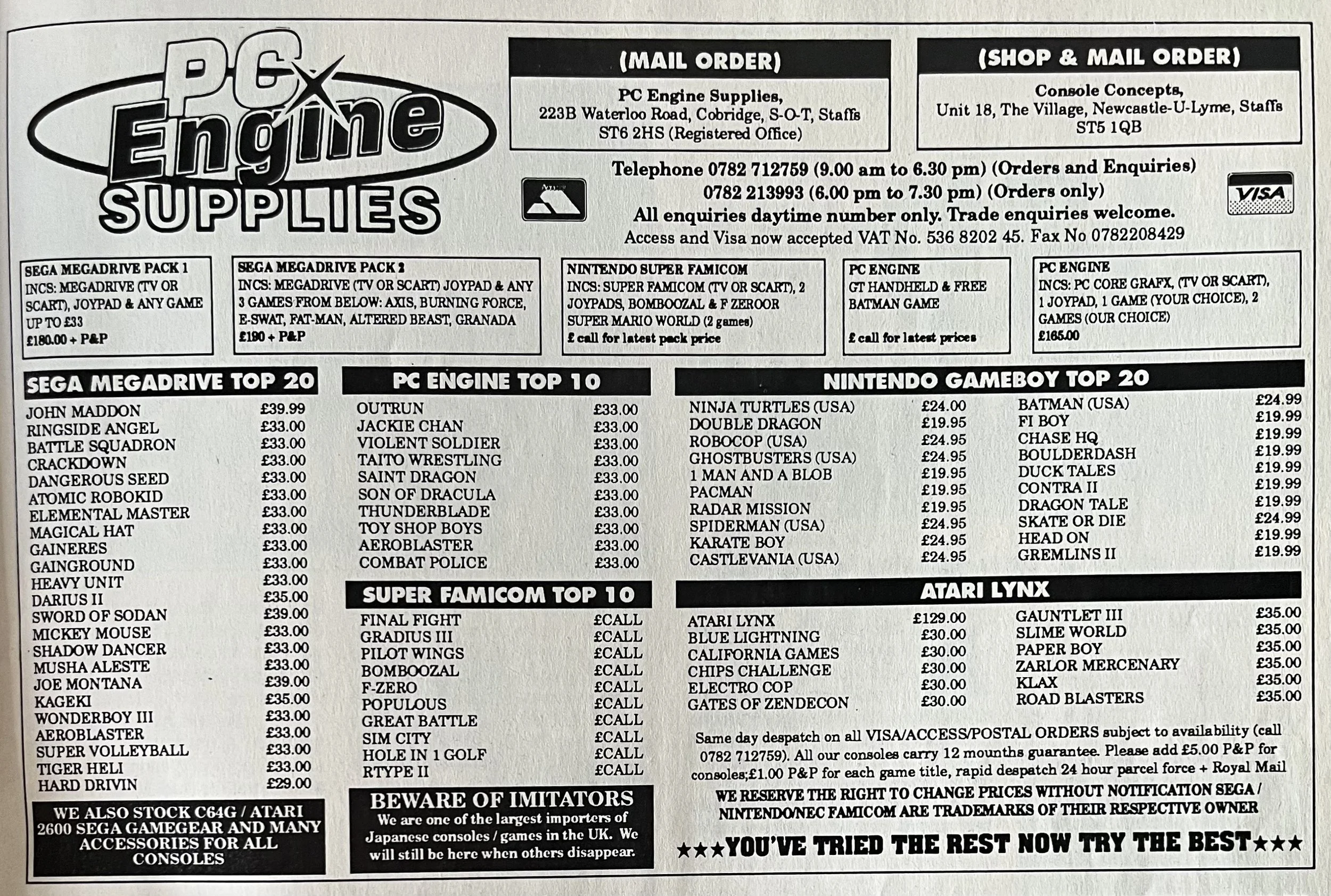
In the late 80s, UK ‘grey importing’ meant having a connection in Japan that could source the latest video game releases and ship them to the UK. These releases would then be sold at considerable mark-up to local consumers via mail order catalogues or small high street shops.
It wasn’t particularly sophisticated. But it worked. And the reason it worked was because of the long delays between international release dates.
Back then, you might have to wait a couple of years before a new Japanese system made its official debut in the UK. Or it might not arrive at all.
Most people reading this site would be vaguely aware of the above.
But here’s the kicker. The grey import scene in the UK pre-empted the video game import scene in the US by a number of years. And in doing so, it gave UK consumers access to new consoles and games before their American counterparts.
TurboGrafx in the UK
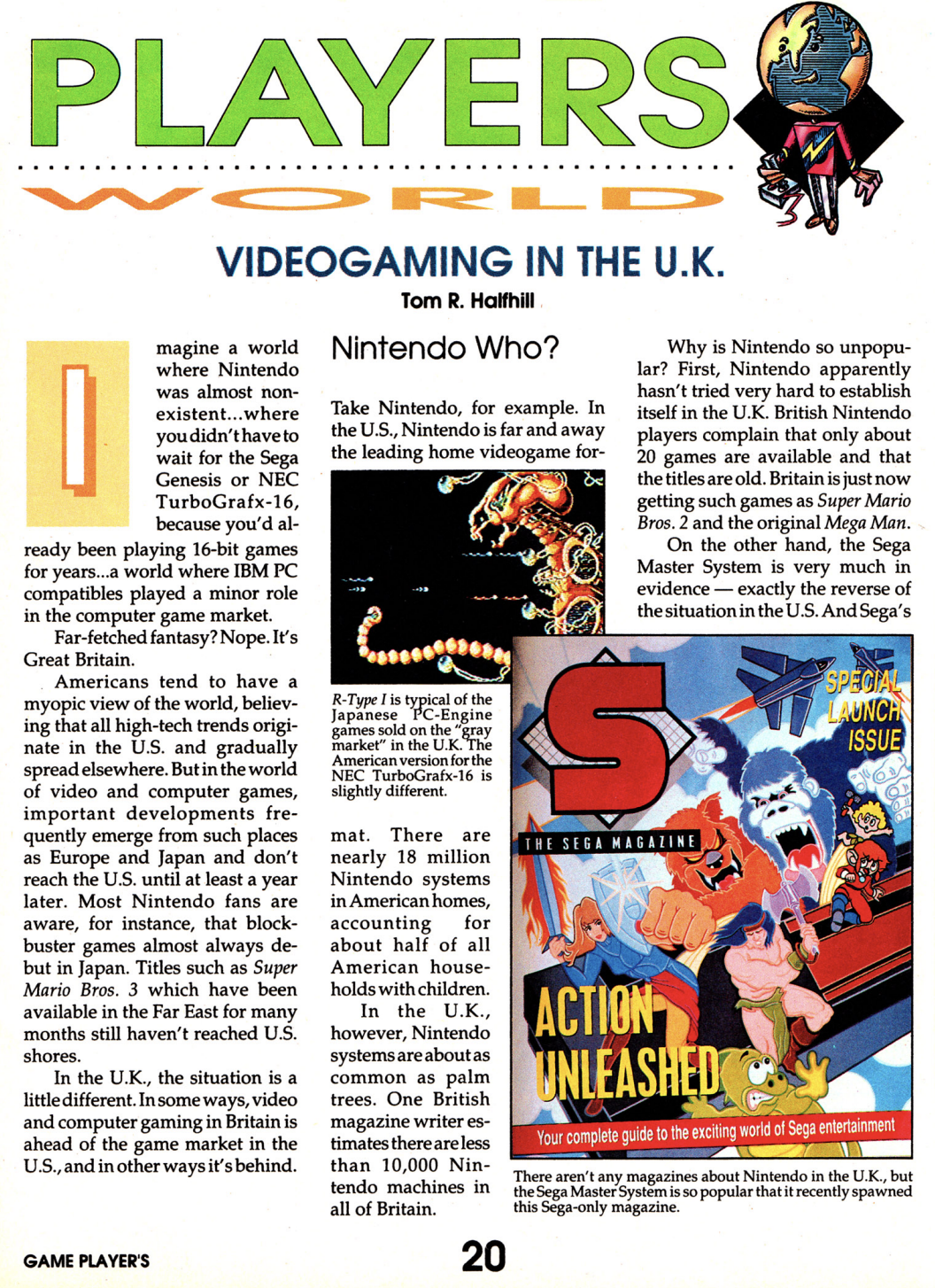
There’s a fascinating article in issue six of Game Players magazine (December 1989), about computer and video games in the UK vs the US.
It begins; “Imagine a world where Nintendo was almost nonexistent...where you didn't have to wait for the Sega Genesis or NEC TurboGrafx-16, because you'd already been playing 16-bit games for years…”
The article then goes on to list the differences between the two countries and their respective video game industries. Like the fact Nintendo’s NES had limited success in the UK, and the industry was still dominated by ageing 8bit micro computers.
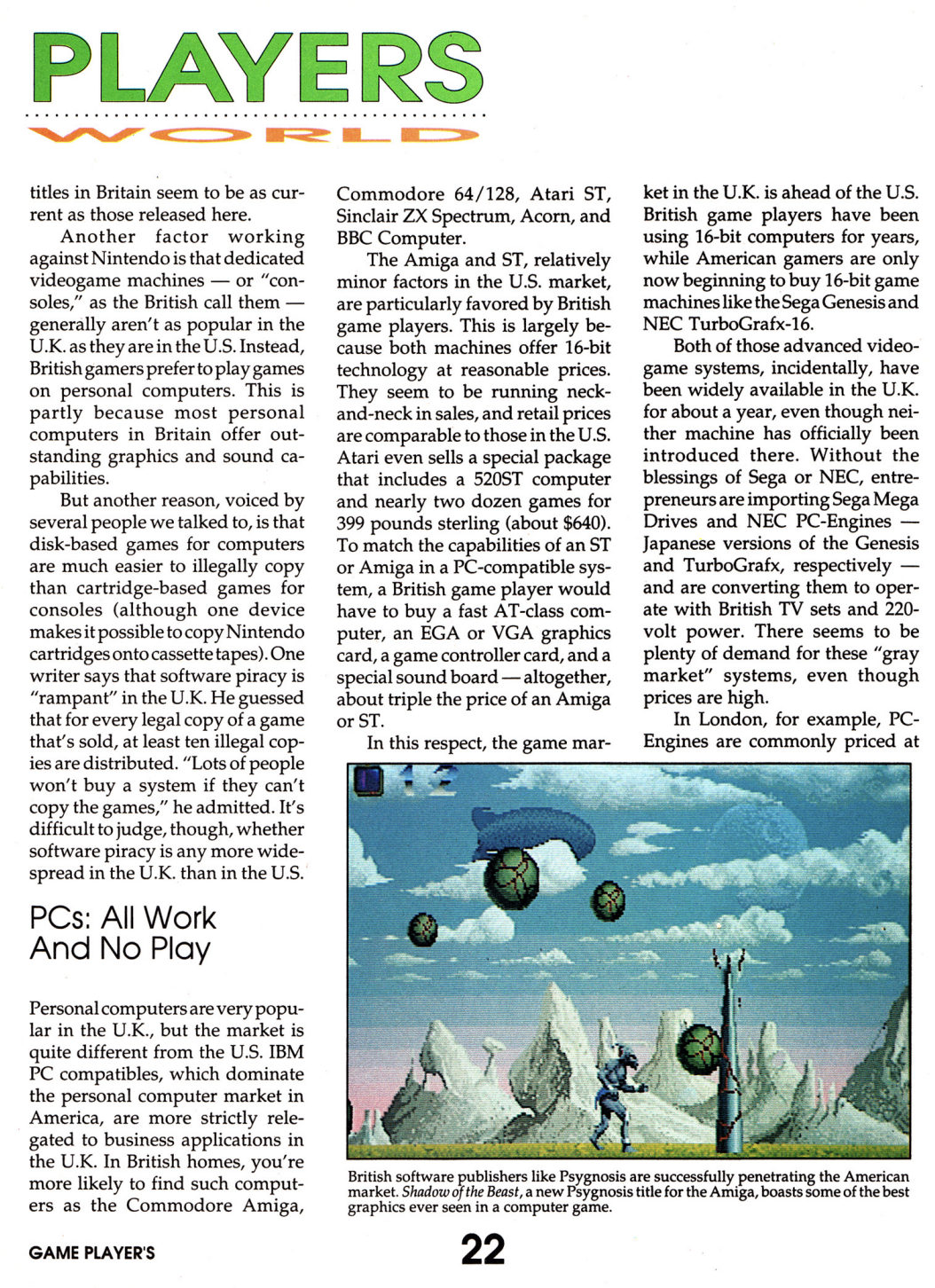
It’s this next section that caught my eye.
“Without the blessings of Sega or NEC, entrepreneurs are importing Sega Mega Drives and NEC PC-Engines, Japanese versions of the Genesis and TurboGrafx… Both of those advanced video game systems, incidentally, have been widely available in the U.K. for about a year, even though neither machine has officially been introduced there… In this respect, the game market in the UK is ahead of the US.”
Now you’re playing with power
The UK grey import scene was at its height in 1989 and 1990. These were liminal years for the UK industry as the old 8bit systems that had powered the UK for almost a decade were being supplemented by new computers and consoles. There was chaos and uncertainty. And with no clear market leader the field was wide open to a host of new systems
Video game magazines like CVG would report on the latest tech from Japan, and in 1989 it was arriving at a rapid click. This coverage created consumer demand, and enterprising folks stepped up to meet that demand with small shops and mail order catalogues offering the latest titles from Japan years ahead of any official release.
Conversely, Nintendo had a vice-like grip on the US home console market in the late 80s. There were plenty of games to choose from, and most people had only owned their NES for a year or two.
Long story short; US consumers weren’t looking to upgrade their home consoles in 1989. And if they were, they would also know that a new generation of systems, including the Mega Drive (Genesis) and PC Engine (TurboGrafx) were slated for an official release in the near future.
Grey imports and UK High streets
The PC Engine is the most striking example of new technology reaching the UK before the US. Launched in Japan in 1987, the system would arrive as the rebranded TurboGrafx-16 on US shores in late 1989.
If you lived in the UK you could walk into a High street shop and buy a PC Engine as early as 1988. Which was convenient, as the system never saw an official UK release.
Sega’s Mega Drive did receive an official UK release. But that didn’t happen until late 1990. So if you went the grey market import route you would have enjoyed a two-year headstart on your peers. Also, you’d be able to play the games at their original 60hz speed, and without slow down and borders that gimped the official PAL release.
Diehard Gamefan and the US imports
The US import market would come into its own as the 90s progressed, and the shift from 16bit to 32 bit systems threw a bunch of new contenders into the ring.
The massively influential Diehard Gamefan magazine began life as an import catalog in the back of EGM magazine. That’s a whole other story. And by the time the Playstation and Saturn were on the horizon US magazines had no shortage of ads for Japanese imports.
Point being, the UK got their first. With nothing more than some fax machines and DHL overnight delivery…
Video game history tends to favor a US centric narrative. One that downplays the global scope of this industry and its rich history.
Funnily enough, that’s something the same Game Players article called out all the way back in 1990. As it notes, “Americans tend to have a myopic view of the world, believing that all high-tech trends originate in the U.S. and gradually spread elsewhere…”
The UK’s grey import scene turns that narrative on its head. Because, for a brief period in the late 80s, it was easier to get your hands on a PC Engine, Sega Mega Drive, or Neo Geo on a UK High Street than the US.
Mikolai