Terarin Games
Junichi Terayama makes some of the best indie shooters in the business.
And when I say shooters, I mean that in an old-school, grey-import, shoot-em-up, shmup, STG sense.
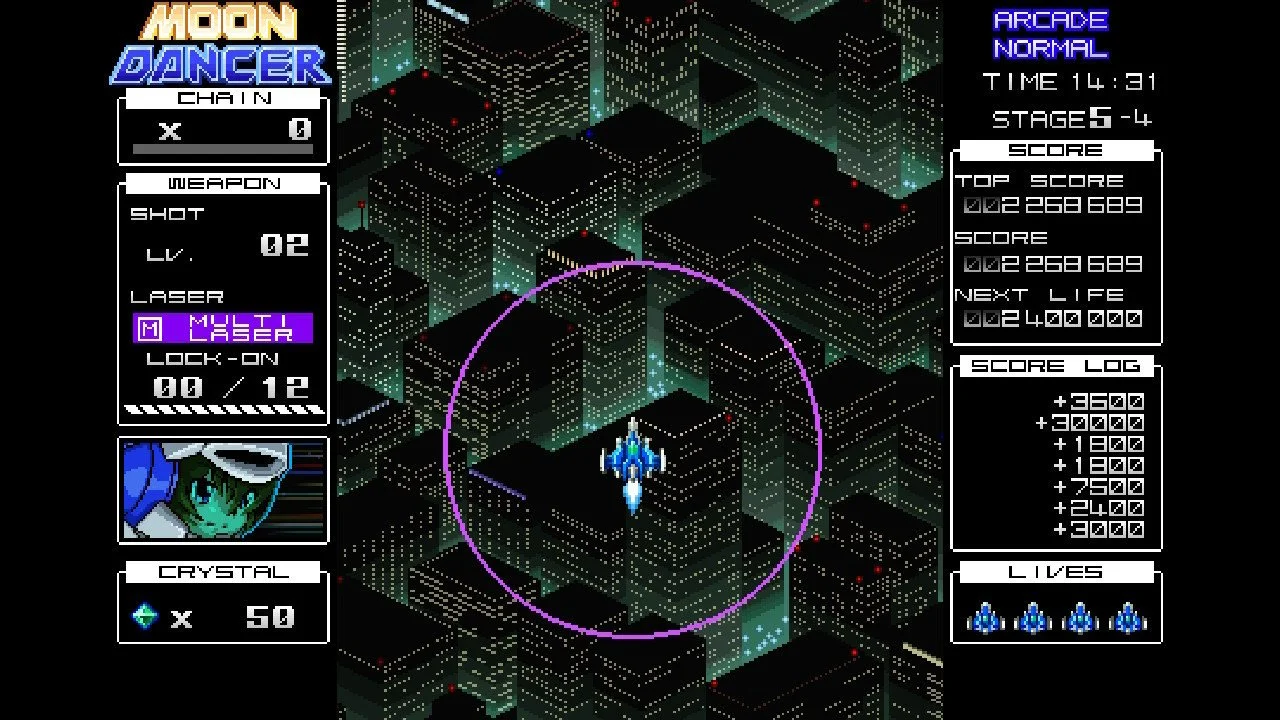
Most of these titles riff on a shooting mechanic or idea from genre classics. Whether it’s the lock-on system of Missile Dancer, or the PC Engine throwback vibes of Raging Blaster, they deliver short, sharp, examples of the genre at its best.
Since 2016 he’s has developed and released several titles under the Terarin Games moniker. That makes him one of the most prolific one-man devs I can think of.
Suffice to say, I’m a huge fan. So I reached out to Junichi, aka, Terarin55, to ask him about the secret of his success. And when we can finally buy a physical copy of these games.
Let’s start with an easy question. What are your favorite STG or shmup titles?
My favorite STG titles are the ones I played as a kid on the PC Engine and Mega Drive. To name a few specific ones: Dragon Spirit, Image Fight, Blazing Lazers, M.U.S.H.A., and so on.
There are plenty of independent STG games on PC (via Steam and other platforms), but they’re far less common on dedicated video game systems like the Switch. What made you decide to release your titles on Switch, and how much of your audience comes from the Switch vs PC?
In Japan, there are still many people who only play games on dedicated consoles rather than PCs. By supporting both the major PC platform (Steam) and the major dedicated console (Switch), I felt I could reach the vast majority of potential players. The user split between Switch and PC is roughly 50:50. Switch tends to attract more Japanese players, while PC draws more from North America and Europe.
Blaze of Storm
How long does each title take you to produce? Is there a typical process you follow when it comes to development, planning, timelines, etc, or is each title unique in that regard? What tools do you use to produce your titles?
It usually takes about one year to complete a single title. My general process follows this order: planning → development → tuning → release.
I regularly share progress updates on social media. To gather player feedback, I exhibit at indie game events as often as possible and release demos on Steam to collect input directly.
Tuning is the phase I emphasize most. I typically spend over 1,000 hours on it alone. I deliberately limit each project to one year because I believe focusing intensely within a fixed timeframe produces better results. Longer development periods also increase the risk of the project becoming unprofitable, which could jeopardize my ability to continue making games.
For development tools, I use GameMaker Studio. It provides all the features needed for 2D games, supports multiple platforms, runs very efficiently, and offers the flexibility that lets me leverage my programming skills to the fullest. I’ve built my own custom systems and libraries specifically for STG development, and I keep updating them with each new title, which greatly improves my efficiency.
I know many people would love to see your games given a physical release. Are there any plans to release a compilation or individual titles on Switch? Has anyone approached you about a release?
I’ve received several offers for physical releases over the years. However, I currently have no plans to pursue them. I completely understand that collectors want physical editions, but for a small business like mine, the added manufacturing and distribution costs would be a heavy burden. If I ever create a major hit in the future, physical releases might become feasible, but right now, my focus is on making the best games possible.
Raging Blasters
What about the marketing side of things? As a small indie developer, I assume there really isn’t much budget for marketing? How do you get the message out?
I don't know what effective marketing is. STG is a very niche genre. Signing a contract with a publisher and having them handle promotion isn't necessarily the most effective method.
Instead, I believe direct communication with players is far more important, which is why I’ve chosen self-publishing.
At the moment I can only communicate in Japanese and English, but I want to reach as wide an audience as possible, so thank you again for this interview opportunity.
I haven’t yet created what I’d call a ‘hit’ title, but I firmly believe that consistently releasing high-quality games will eventually earn recognition from the right people.
Do you still have a day job, and how do you find time to produce games? Do you work late into the night, early in the morning, etc?
I used to work full-time as an information security engineer while developing games part-time, but now I’m a full-time game developer. When I’m deeply focused, I work flexibly, day or night, whenever inspiration strikes, and take breaks to recharge when needed.
We seem to have had a resurgence in STG games in recent years, with many classic titles being re-released, what do you attribute that to?
STG is a genre that has existed since the earliest days of video games. Its simple yet deeply addictive nature means it retains a steady level of demand regardless of era.
For companies that own classic IPs, porting or remastering them is a relatively safe and reliable business decision.
However, creating brand-new STG titles is completely different, it requires an almost obsessive level of passion from the creator. That’s precisely why so many enthusiastic indie developers continue to produce fresh STG experiences today.
Terra Flame
Your titles are known for focusing on a specific mechanic. Are there any STG mechanics or ideas you want to implement for future releases?
I always set a clear core concept for each title. In the past, I’ve focused on lock-on mechanics with Missile Dancer and Moon Dancer, and score-attack gameplay with Crystal Breaker.
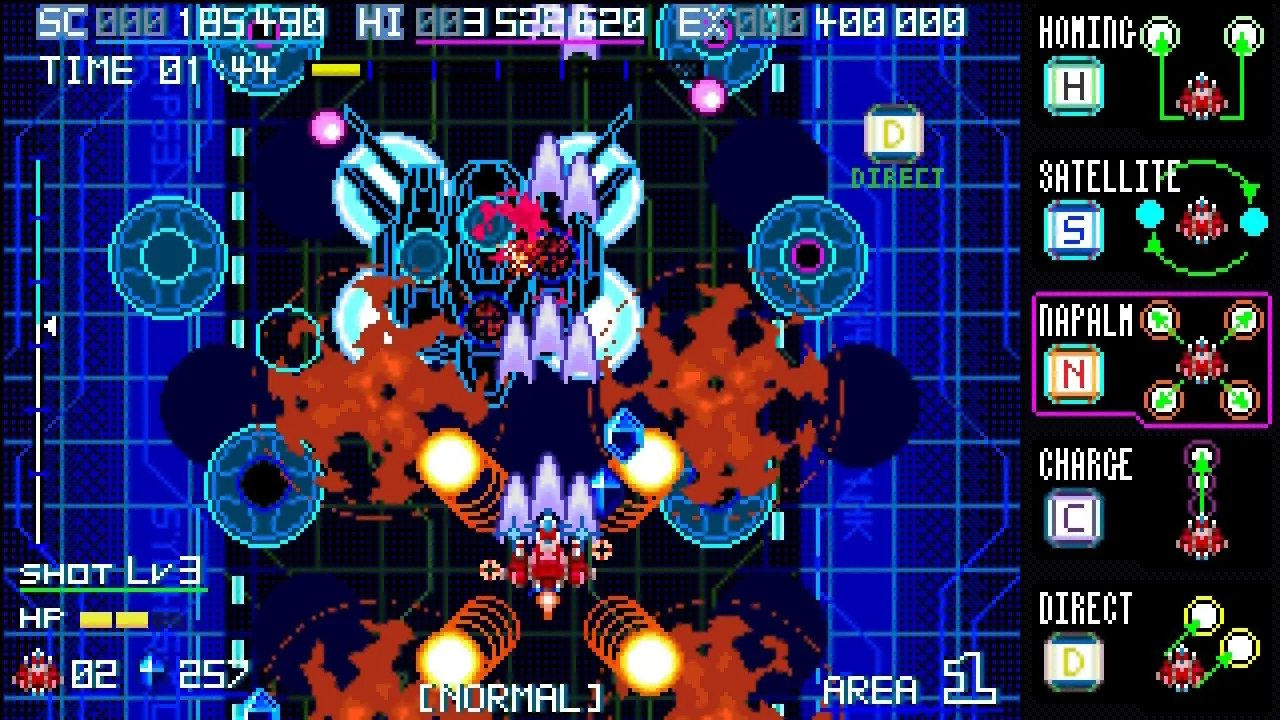
Blaze of Storm was built around the idea of “condensed satisfaction,” packing more than 20 unique bosses and distinctive stages into a tight 30-minute full run.
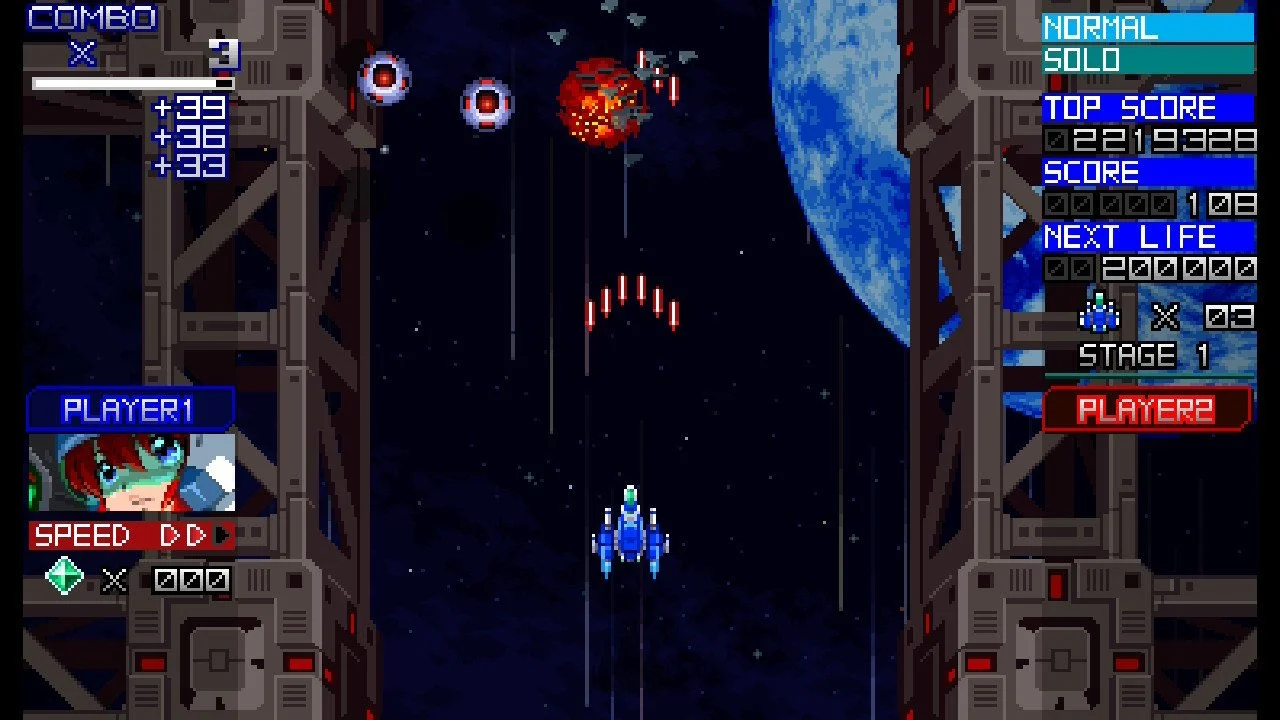
My next title, Raging Blasters 2, will emphasize the fun of two-player co-op. Even solo players will be able to enjoy a pseudo two-player experience.
What’s the biggest misconception people have about you and your games?
Because my games have a retro aesthetic, some people assume they are simply copies or homages of classic titles. However, I see myself as creating new, original works.
From the perspective of my childhood self, I’m now living in the ‘future’, and I believe I should take full advantage of that perspective.
Many older games suffer from usability issues or insufficient tuning, and I treat those as valuable lessons to build better experiences today.
While I deeply respect and draw influence from past titles, I analyze both their strengths and weaknesses to create modern games that feel improved and refined.
My titles may not feature wildly eccentric ideas or extreme shock value, but I focus squarely on what makes video games fun at their core: meaningful risk-reward decisions, satisfying controls and ‘feel’, and carefully crafted details that resonate with players during actual play. I’d be delighted if people would try my games themselves and feel the difference from pure retro titles.
What is your ultimate goal with Terarin Games? What does success look like to you
My ultimate goal is simply to keep making games. By staying small and lean, I’ve managed to sustain the business so far. As long as I can continue, I can keep improving my skills and experience, and in turn create even better games.
In a world flooded with countless titles, I often reflect on the meaning of making my own games.
Lately, players seem to have lower tolerance for stress, and many are content just watching gameplay rather than playing themselves. Developers often respond by making low-stress, passive experiences.
Yet the fundamental appeal of video games lies in interactivity, you can’t truly feel their charm without playing. Core game design revolves around risk-reward tension, and removing all stress eliminates that essence.
Of course, there’s room for all kinds of games, but I think it would be a shame to let that core interactive charm fade away. For me, the meaning of making games is to keep pursuing deep risk-reward dynamics, polished controls, and satisfying ‘feel’. If there are players who enjoy my work, that’s success in my eyes.
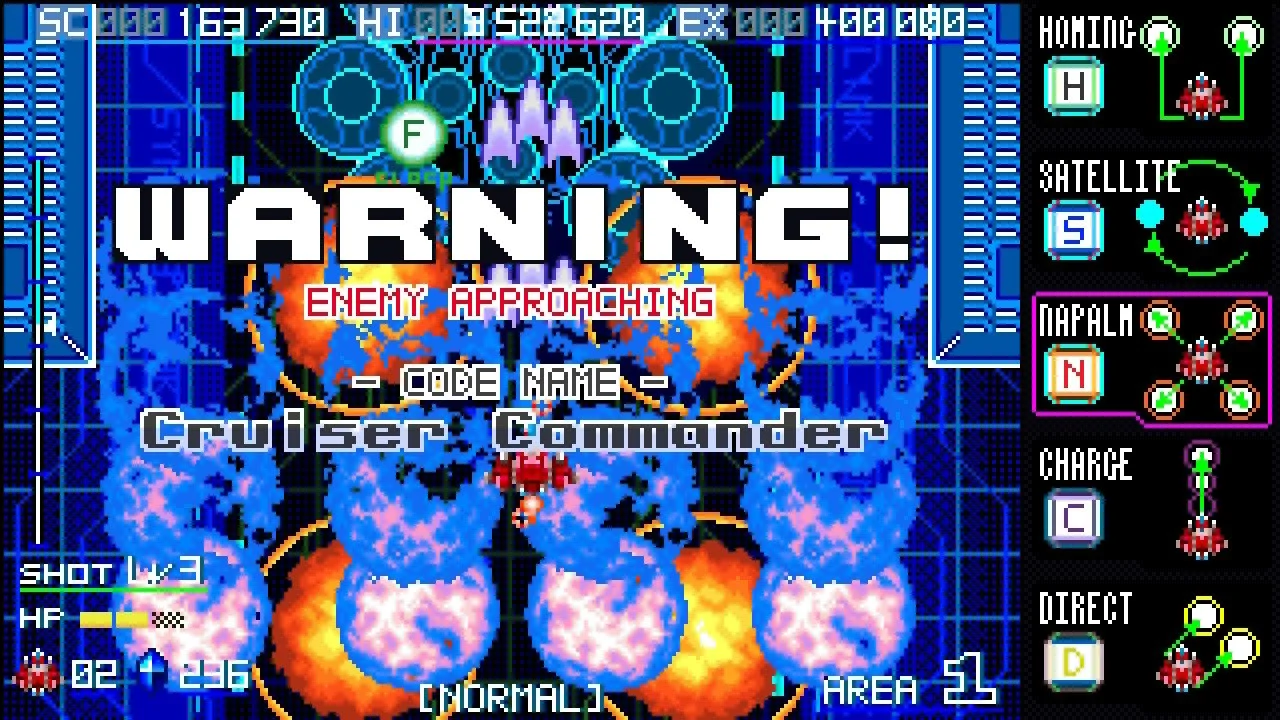
Blaze of Storm
It’s been ten years since your first releases - Image Striker - how has the industry changed for an indie developer like you? Both in terms of visibility and the ability to reach your audience?
For indie developers, the environment for creating and releasing games has improved dramatically.
Powerful, accessible tools are available, a huge amount of technical knowledge is openly shared, and major platforms that once were closed to non-companies are now open to indies. Hit indie titles have emerged and raised overall awareness of indie games.
On the other hand, as companies have taken notice, ‘major indie’ games have become more prominent, while truly independent, smaller-scale titles can sometimes get buried.
Personally, I feel my work doesn’t fit the typical ‘trendy indie’ mold, so I prefer to call myself a solo game developer rather than an ‘indie’ one.
Audience reach has become increasingly polarized: big indie titles get massive promotion, while smaller ones rely more and more on direct creator–player communication.
***